Continuous steam sterilization employs a purely physical method (using high-temperature saturated steam or superheated steam), leaving no chemical residues and eliminating concerns about radiation sources. It complies with the food hygiene standards of high-end markets such as Europe, the United States, and Japan.
II. Significant Technical Advantages
High-Efficiency Sterilization and Quality Preservation
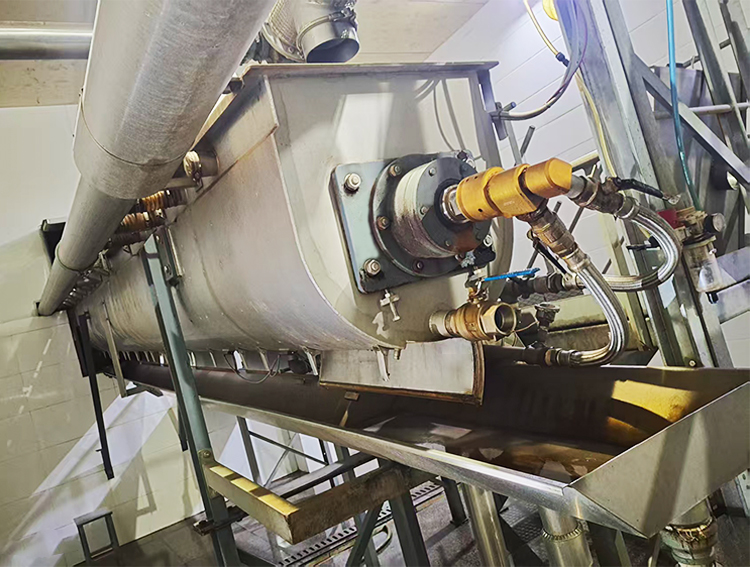
Continuous steam sterilization lines typically adopt High-Temperature Short-Time (HTST) processing, with temperatures ranging from 155–180°C and exposure times of only 3–10 seconds. This rapid treatment effectively eliminates pathogens such as E. coli, Salmonella, and molds, reducing total bacterial counts by 90%–99.99%. At the same time, it maximally preserves the volatile oils, color, and original flavor of spices.
Continuous and Automated Production
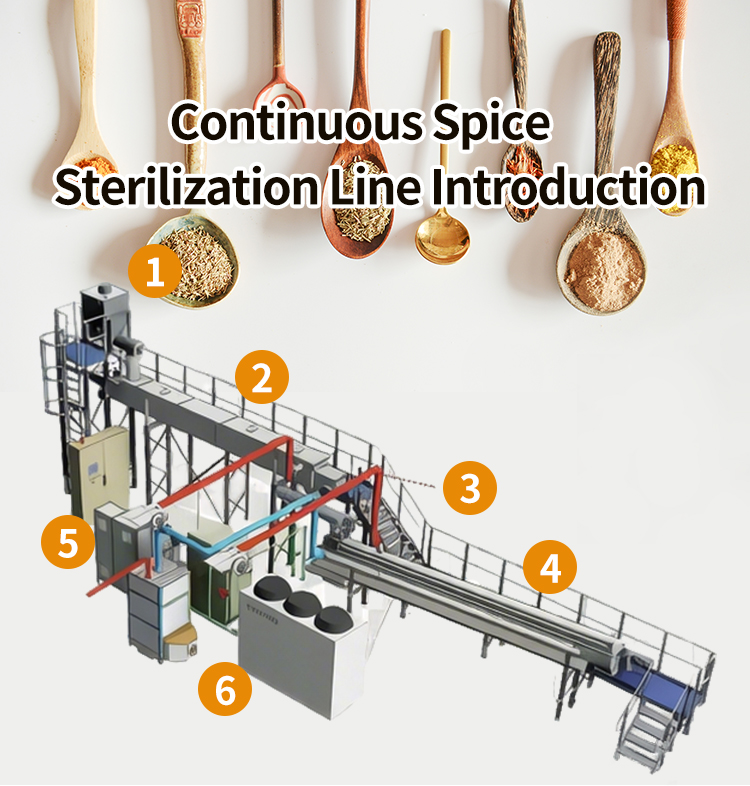
The equipment can operate continuously for 24 hours, featuring automatic feeding at the front end and automatic discharging at the rear end. This ensures high production efficiency and is suitable for large-scale production (with capacities ranging from 50 to 4,000 kg/h). Fully automated operation minimizes human intervention, reducing the risk of cross-contamination.
Flexibility and Controllability
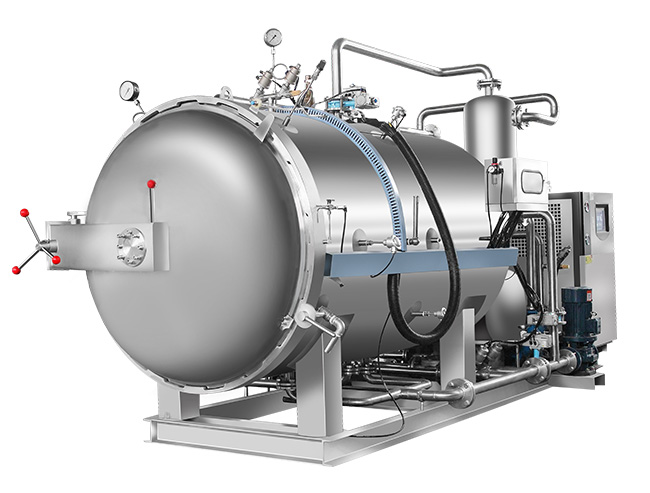
Sterilization temperature, time, and production capacity can be flexibly adjusted according to product characteristics, allowing for an optimal balance between sterilization effectiveness and flavor retention. Some advanced equipment is also equipped with vacuum assistance to accelerate steam penetration, further shortening heating time.
Energy Efficiency and Cost-Effectiveness
Sterilization costs are relatively low, approximately RMB 200–400 per ton (covering water, electricity, and gas consumption). Superheated steam not only sterilizes but also appropriately reduces material moisture, thereby decreasing the need for subsequent drying steps.
 English
 中文简体
中文简体