
Why can a sterilization retort cook rice?
Core principle of a sterilization retort: a sealed chamber that allows saturated steam to heat it up.
1. Normal pressure mode (used for cooking rice)
No pressurization, just low-pressure steam enters, so the inside of the pot is close to 100℃ - exactly the same principle as the large rice-steaming cabinets in cafeterias. The high-temperature steam contacts the rice and cooks it.
Many factories that make instant rice, ready meals, or canned rice first use this pot to cook the raw rice.
2. High-pressure mode (the retort's sterilization function)
After the rice is cooked, the retort door is tightly closed, pressure is increased, and the temperature rises to 121℃ for sterilization. This way, the rice can be stored long-term at room temperature (this is how ready-to-eat packaged rice is produced).
Difference from ordinary rice-steaming cabinets:
- Ordinary rice-steaming cabinet: normal pressure, max 100℃, can only cook rice, cannot sterilize, requires refrigeration
- Sterilization retort: one machine, two uses:
✅ Low pressure: cook rice, steam or boil ingredients
✅ High pressure: high-temperature sterilization, allowing long shelf life at room temperature
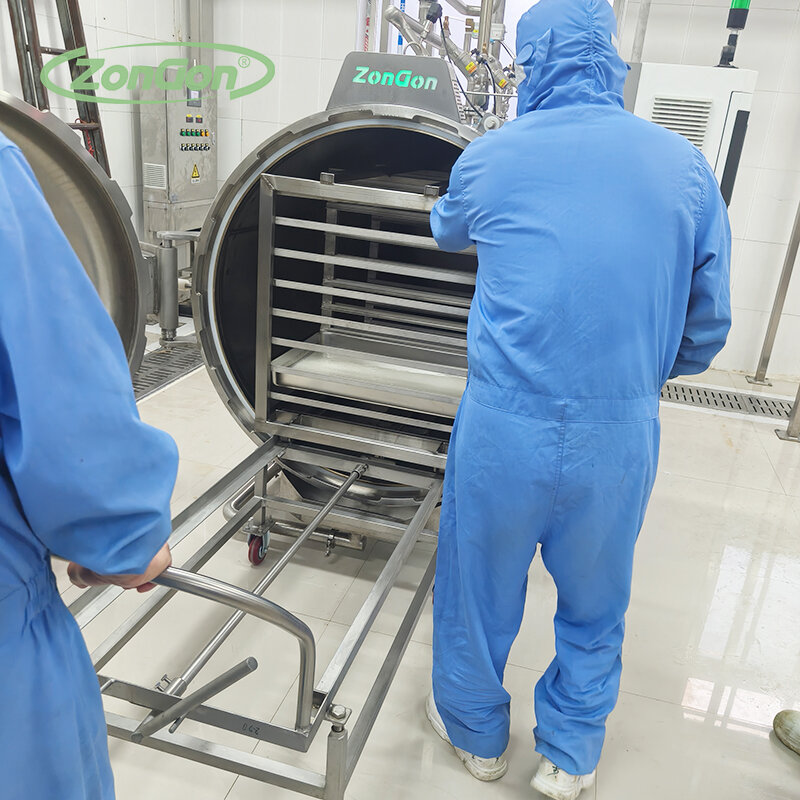
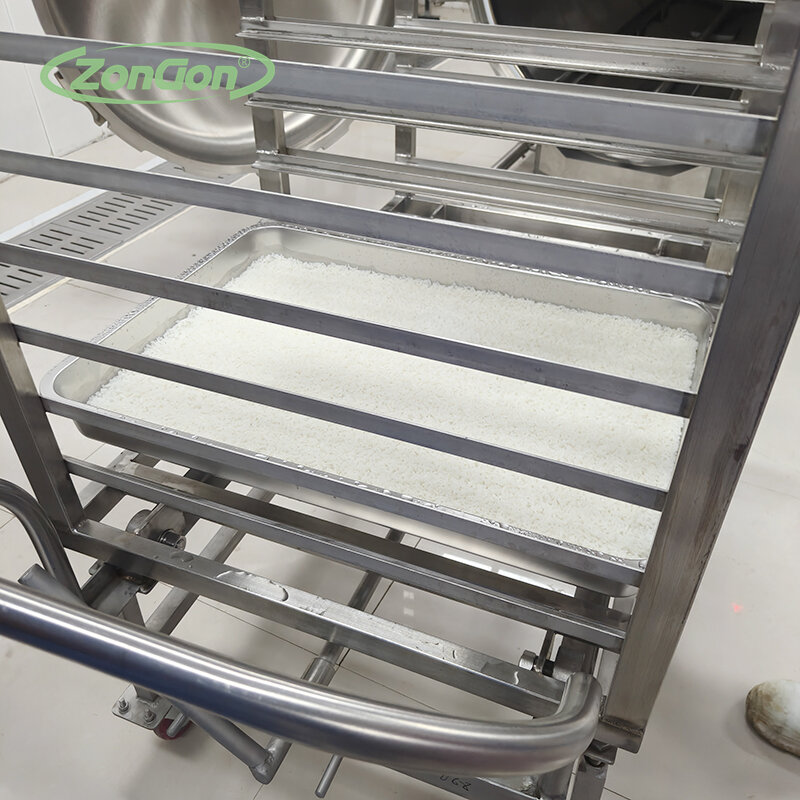
Trays are shallow and rice is spread thin after soaking, so the steam penetrates well and cooks evenly. Whole racks go into the sterilization retort, and after steaming, they are sterilized in the same equipment without transferring - this is a typical process in instant rice factories.
 English
 中文简体